Leonard and Doria Ferguson—
Their Story as recalled by Roberta Ferguson Emerick
Doria was a bookkeeper at the coal mine in Centralia then later became a beautician (cosmetologist and electrologist) and worked in Bremerton, WA. Leonard worked at the Pope and Talbot Lumber Mill in Port Gamble. They lived in mill housing located close to his work. Their only child, Roberta May, was born May 16, 1936.
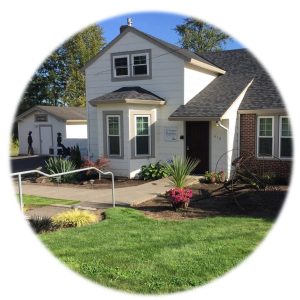
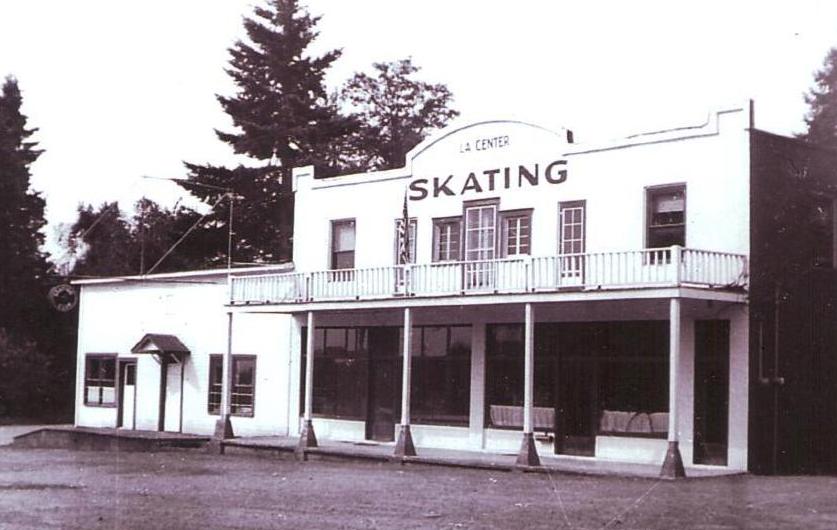
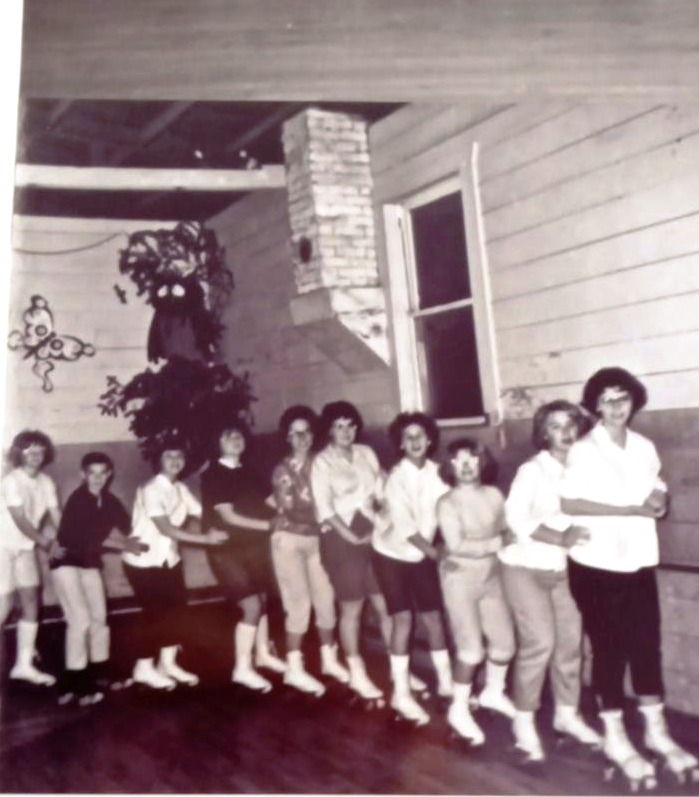
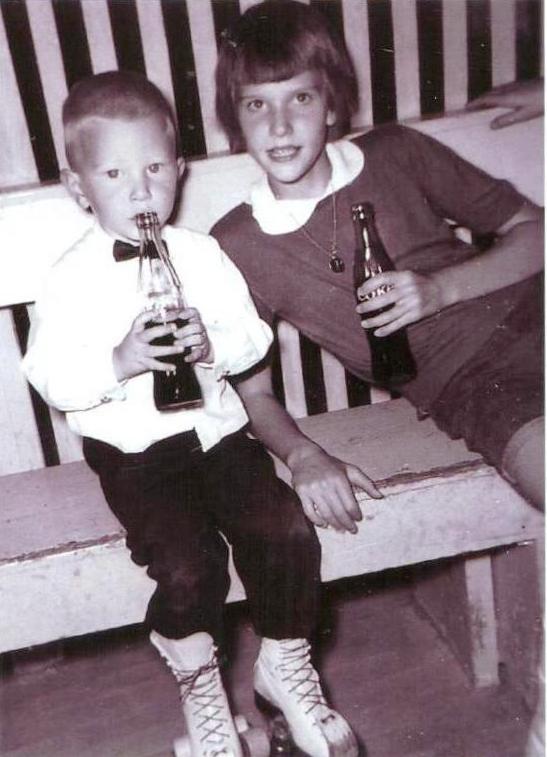
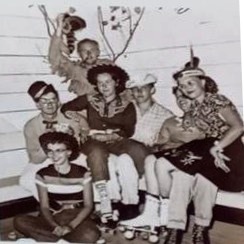
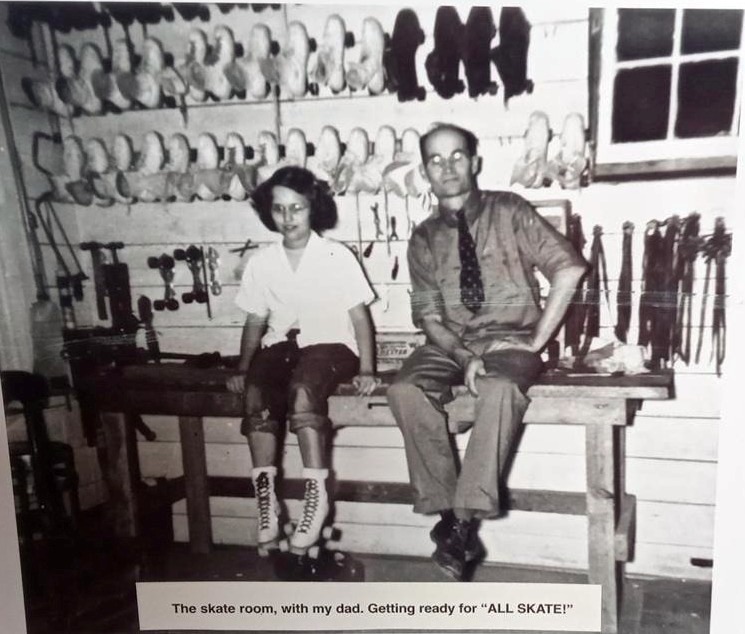
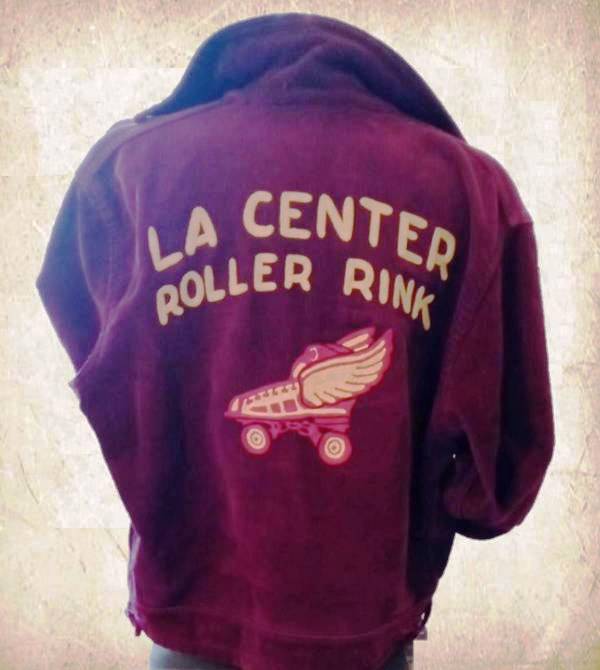
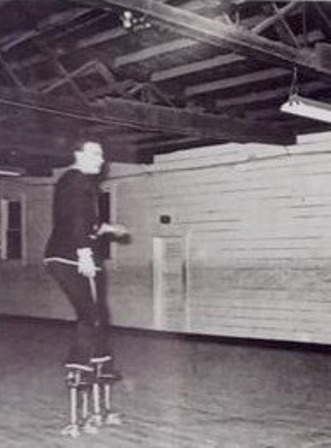
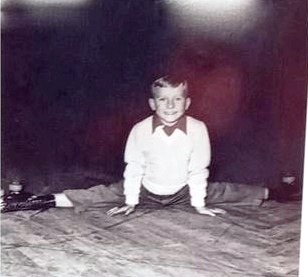
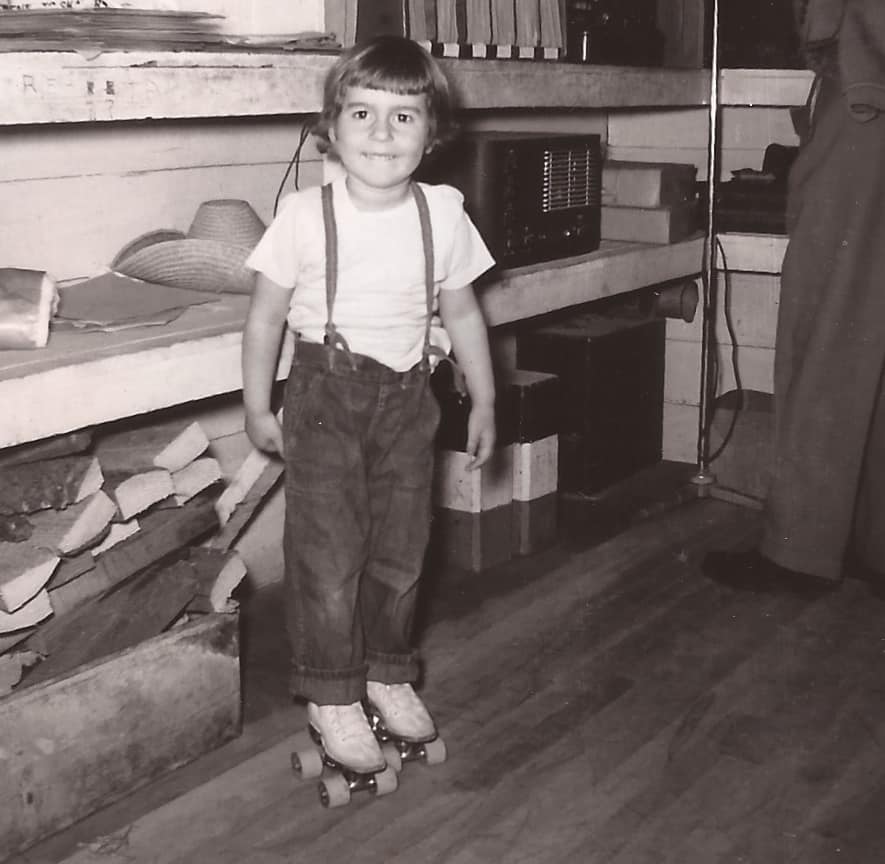
Doria wanted to return to her home ground in LaCenter. Leonard found and purchased the landmark Woodard Hotel, dance hall and surrounding grounds which were in foreclosure at the Cowlitz Co. Bank for a total of $3,000 in 1941. There was a need for hotel accommodations and a restaurant, so they refurbished the main building. Doria handled the business while Leonard worked as a pipe fitter at Kaiser Shipyards–like so many other local men and women. Highway 99 gave way to 1-5 and the traveling public faded. The attached building, the former dance hall with a buckled floor beyond repair, became the focus of their attention when they were offered a good deal on a “package” of skates and sound equipment. A relative from Portland was in the flooring business and soon, the old flooring was removed and replaced with new maple. Leonard, with his carpentry skills, designed a skate room and constructed benches for the skaters. They operated this “mom and pop” business for over 23 years until failing health forced them to sell and move to Vancouver.
Two days after Leonard’s 88th birthday, he was hit by a young driver in a pickup as he was crossing back from the mailbox where he had mailed his birthday thank you cards. He died shortly after the incident. Doria moved to an Assisted Living Facility and later to the Woodland Nursing Home where she lived comfortably until she passed away at the age of 91. She always appreciated the skaters that would visit her. So many good memories were shared about the rink. (She also loved history and made sure her ancestors from Scotland were well-documented.) Both treasured the thought that they provided juvenile recreation for the community. The rink was the gathering site for several church youth groups where the session would end with a “Singsperation”. In the early 60’s, with gentle persuasion from the kids and the reality of changing times, they sometimes allowed a “sock hop” for an extra half hour after the session. That was dedication! (Regrettably, I never experienced this activity during my early years. Sounds like another good way to work off energy—and the kids always had plenty of that!)





 La Center Historical Museum